
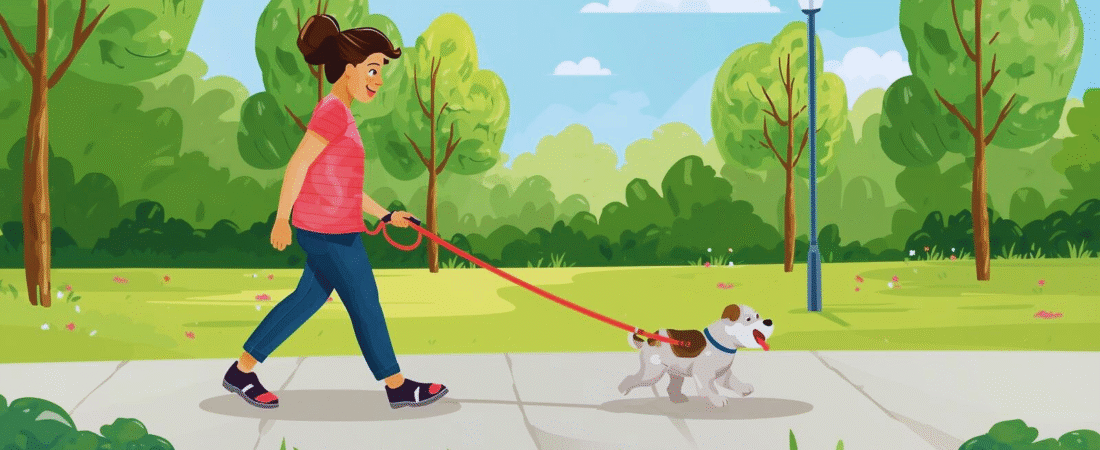
Teaching your puppy to walk calmly on a leash is one of the most rewarding parts of early training. Not only does it make walks more enjoyable, it also helps your puppy feel safe, connected, and confident in the world. With patience, consistency, and the right tools, even energetic puppies can learn to walk politely without pulling.
Before You Start: Choose the Right Gear
Using the right equipment makes a huge difference, especially with young puppies who haven’t learned leash manners yet. You’ll want gear that’s comfortable for the puppy and gives you gentle control without causing stress.


Step 1: Start Training Indoors
Before heading outside, begin in a calm, distraction-free space such as your living room or hallway. This helps your puppy focus on you rather than the environment.
- Clip on the leash and let your puppy explore.
- Reward calm behavior with treats or soft praise.
- Let your puppy get used to the feeling of the leash dragging gently behind.
This builds confidence and removes the initial excitement many puppies feel around the leash.
Step 2: Teach “Follow Me”
This is the foundation of a loose-leash walk. Your puppy learns that staying close to you pays off.
- Hold a treat near your leg.
- Take two or three steps and encourage your puppy to follow.
- When your puppy walks at your side, mark the moment (“yes!”) and reward.
Puppies learn best in short, simple bursts.
Step 3: The “Stop When They Pull” Rule
Pulling happens because puppies think that pulling gets them where they want faster. Your goal is to teach the opposite.
- When the leash becomes tight → stop walking.
- Stand still until your puppy turns toward you.
- When the leash loosens, praise and continue.
This teaches your puppy that pulling = no progress.
Step 4: Reward a Loose Leash
Whenever the leash is loose—even for a second—reward your puppy with praise, a treat, or gentle encouragement. This tells your puppy that staying close to you is the best place to be.
Step 5: Use Turning to Your Advantage
If your puppy is pulling forward again and again, simply change direction.
This trains your puppy to stay focused on you.
- Puppy pulls → turn in the opposite direction.
- Reward your puppy for catching up and following.
This makes walks feel like teamwork.
Step 6: Practice Short Walks
Puppies have short attention spans. Instead of long walks, do:
- 5–10 minute training walks
- 2–3 times a day
- Slowly increase duration over time
This keeps training positive and productive.
Step 7: Add Distractions Slowly
Once your puppy understands the basics, move from indoors to slightly more distracting areas:
- Backyard
- Quiet sidewalk
- Busier sidewalks
- Parks
Slow exposure prevents overwhelm and builds confidence.
Step 8: Be Consistent and Patient
Leash training takes time. Expect ups and downs — totally normal!
If you stay consistent with stopping for pulling and rewarding loose leash moments, your puppy will learn quickly.
Optional Tools That Help


Final Thoughts
Teaching your puppy to walk without pulling is one of the best investments you can make in their long-term behavior. You’re building communication, trust, and a positive relationship. Keep sessions short, stay encouraging, and celebrate small wins — your future walks will be calmer, happier, and much more enjoyable for both of you.
This website contains affiliate links. As an Amazon Associate, I earn from qualifying purchases. I only recommend products I trust and would use with my own dog.